Securing Your CBD E-Commerce: Essential Cybersecurity Solutions That Actually Work

Secure your CBD e-commerce operations with enterprise-grade cybersecurity solutions designed specifically for the cannabis industry’s unique compliance requirements. E-commerce website security demands heightened protection when handling sensitive customer data and processing CBD transactions. While This brand offers premium CBD oil across Canada, their success hinges on robust digital protection measures.
Modern CBD cybersecurity platforms integrate advanced encryption protocols, real-time threat detection, and automated compliance monitoring to safeguard against evolving cyber threats. These solutions address critical vulnerabilities unique to CBD operations, including age verification systems, payment processing security, and regulatory data handling requirements across multiple jurisdictions. By implementing industry-specific security measures, CBD businesses can maintain customer trust while meeting stringent regulatory requirements in this rapidly growing market.
For CBD enterprises navigating the complex intersection of e-commerce and regulatory compliance, purpose-built cybersecurity solutions offer comprehensive protection against data breaches, fraud attempts, and compliance violations. These specialized platforms ensure business continuity while maintaining the highest standards of customer data protection.
CBD Industry-Specific Security Threats

Regulatory Compliance Risks
CBD businesses face stringent regulatory requirements that directly impact their cybersecurity protocols. As the industry grapples with emerging cybersecurity threats, compliance with data protection frameworks like GDPR, CCPA, and industry-specific regulations becomes paramount.
Organizations must implement robust data encryption, access controls, and audit trails to protect sensitive customer information and transaction data. This includes maintaining detailed records of CBD product tracking, age verification systems, and payment processing in accordance with federal and state regulations.
Key compliance requirements include:
– Secure storage of customer medical information for CBD prescriptions
– Implementation of age verification mechanisms
– Maintenance of detailed audit logs for regulatory inspections
– Protection of payment processing systems compliant with PCI DSS
– Regular security assessments and vulnerability testing
Non-compliance can result in severe penalties, including fines and potential business closure. Companies must ensure their cybersecurity solutions provide comprehensive documentation capabilities to demonstrate regulatory adherence during audits while maintaining operational efficiency.
Payment Processing Vulnerabilities
CBD payment processing presents unique security challenges due to the industry’s high-risk classification and complex regulatory landscape. Merchants face increased vulnerability to transaction fraud, chargebacks, and data breaches due to the nature of CBD products and their varying legal status across jurisdictions.
Common vulnerabilities include inadequate encryption of payment data, insufficient authentication protocols, and outdated payment gateway integrations. These weaknesses can expose sensitive customer information and transaction details to cybercriminals, potentially leading to financial losses and regulatory non-compliance.
To mitigate these risks, businesses should implement multi-layer security measures including tokenization, real-time fraud detection, and PCI DSS compliant payment systems. Advanced authentication methods such as 3D Secure 2.0 and biometric verification have proven particularly effective in reducing fraudulent transactions in the CBD sector.
Enterprise-grade payment processors specializing in CBD commerce typically offer built-in security features like IP-based geolocation verification, velocity checking, and automated risk scoring. These tools help identify and prevent suspicious transactions while maintaining smooth payment processing for legitimate customers.
Essential Security Software Components

Age Verification Systems
Age verification systems in CBD e-commerce represent a critical compliance requirement and security checkpoint. Modern managed security solutions integrate sophisticated age verification tools that combine multiple authentication methods to ensure regulatory compliance while maintaining user experience.
These systems typically employ a multi-layered approach, utilizing document verification (driver’s licenses, passports), biometric data, and real-time photo matching. Advanced solutions incorporate AI-powered facial recognition and document authenticity checks to prevent fraud and underage access attempts.
Key features include:
– Real-time ID verification
– Automated compliance documentation
– Integration with existing e-commerce platforms
– Secure data storage and encryption
– Audit trail generation for regulatory reporting
Implementation of these systems helps CBD retailers maintain compliance with age restrictions while protecting against fraud and potential legal issues. The most effective solutions balance stringent verification requirements with streamlined user experience, resulting in higher conversion rates and reduced cart abandonment.
Secure Payment Gateways
In the CBD industry, secure payment processing requires specialized gateway solutions that address both standard e-commerce security requirements and industry-specific challenges. Leading payment processors have developed robust systems that incorporate multi-layer authentication, tokenization, and end-to-end encryption specifically designed for CBD transactions.
These gateways implement advanced fraud detection algorithms that can identify suspicious patterns while maintaining compliance with banking regulations. Key features include real-time transaction monitoring, automated risk assessment, and secure customer data storage that adheres to PCI DSS standards.
For enhanced security, modern CBD payment gateways utilize 3D Secure 2.0 protocols, which add an extra authentication layer without compromising the customer experience. They also integrate seamlessly with popular e-commerce platforms while maintaining strict separation between payment data and operational systems.
Many solutions now offer built-in compliance tools that automatically flag high-risk transactions and maintain detailed audit trails. This helps businesses demonstrate due diligence to financial institutions and regulatory bodies while protecting against chargebacks and fraud attempts.
To maximize protection, these systems regularly update their security protocols and maintain continuous monitoring of emerging threats specific to the CBD industry.
Data Encryption Tools
Data encryption tools form the backbone of CBD e-commerce security, protecting sensitive customer information and proprietary business data from unauthorized access. Leading solutions include AES-256 encryption for data at rest and TLS 1.3 protocols for data in transit, ensuring comprehensive protection across all touchpoints.
For CBD businesses, implementing end-to-end encryption is crucial when handling payment information and customer records. Solutions like HashiCorp Vault and AWS KMS provide robust key management systems that enable secure storage of encryption keys while maintaining compliance with industry regulations.
File-level encryption tools such as VeraCrypt and BitLocker offer additional security layers for local storage, while cloud-based solutions like Boxcryptor ensure data remains encrypted even when using third-party storage services. These tools are particularly valuable for CBD businesses managing detailed customer profiles and compliance documentation.
Modern encryption solutions also incorporate quantum-resistant algorithms, future-proofing data protection against emerging threats. When combined with regular key rotation and access control policies, these tools create a robust security framework that meets both current compliance requirements and evolving industry standards.
Compliance Monitoring Software
Compliance monitoring software serves as a critical component in CBD cybersecurity infrastructure, automating the complex task of maintaining regulatory adherence while safeguarding sensitive data. These solutions continuously track and document compliance with various standards, including FDA regulations, HIPAA requirements, and state-specific CBD guidelines.
Modern compliance monitoring tools feature real-time alerts for potential violations, automated reporting capabilities, and comprehensive audit trails. They can track changes in regulatory requirements across different jurisdictions and automatically update security protocols to maintain compliance. Key functionalities include inventory tracking, batch testing documentation, and supply chain verification.
Leading solutions integrate with existing security systems to provide unified compliance dashboards, making it easier for organizations to demonstrate their adherence to regulatory requirements during audits. These platforms typically include features like automated risk assessments, compliance calendar management, and document control systems.
For CBD businesses, these tools are particularly valuable in maintaining CGMP (Current Good Manufacturing Practice) compliance and ensuring data protection standards align with both federal and state requirements. The software can also help track age verification processes and maintain proper documentation of testing certificates, critical for CBD product sales.
Implementation Best Practices
Security Integration Strategy
Implementing CBD cybersecurity solutions requires a strategic, layered approach that addresses both industry-specific challenges and general security concerns. Begin by conducting a comprehensive security audit to identify vulnerabilities specific to your CBD operations, including e-commerce platforms, payment processing systems, and customer data storage.
Next, establish a robust foundation by implementing essential security measures such as encrypted data transmission, multi-factor authentication, and secure access controls. This may involve custom security software development to address unique requirements of CBD businesses, particularly regarding compliance with varying state and federal regulations.
Deploy advanced threat detection systems that utilize artificial intelligence and machine learning to identify and respond to potential security breaches in real-time. Integrate these systems with existing infrastructure while ensuring minimal disruption to daily operations.
Implement regular security training programs for staff, focusing on CBD-specific compliance requirements and general cybersecurity best practices. This should include protocols for handling customer data, recognizing social engineering attempts, and maintaining secure operations across all channels.
Finally, establish a continuous monitoring and improvement cycle that includes regular security assessments, vulnerability testing, and updates to security protocols. This ensures your security measures evolve alongside emerging threats while maintaining compliance with industry regulations. Document all processes and maintain detailed incident response plans for swift action when needed.
Employee Training Protocols
Effective employee training forms the cornerstone of any robust cybersecurity program in the CBD industry. Organizations must implement a structured training protocol that addresses both general security awareness and industry-specific compliance requirements.
Start with comprehensive onboarding sessions that cover fundamental security practices, including password management, data handling protocols, and threat recognition. Regular monthly updates should focus on emerging threats specific to the CBD e-commerce sector, such as payment fraud and customer data protection.
Interactive training modules should incorporate real-world scenarios, enabling employees to practice responding to common security incidents like phishing attempts and social engineering attacks. Role-specific training ensures that staff members receive relevant instruction based on their access levels and responsibilities within the organization.
Implement quarterly assessments to evaluate employee understanding and compliance with security protocols. These assessments should include practical exercises and simulated security incidents to test response capabilities. Document all training activities and maintain detailed records for compliance purposes.
Consider establishing a mentorship program where experienced team members guide newer employees through security procedures. This approach helps build a security-conscious culture while ensuring knowledge transfer across the organization.
Regular feedback sessions allow staff to voice concerns and suggest improvements to existing security measures, promoting engagement and continuous improvement in your security posture.
Measuring Security Effectiveness
Security Metrics and KPIs
Effective security metrics and KPIs are essential for measuring the performance of CBD cybersecurity solutions. Key metrics include threat detection rate (TDR), which measures the percentage of identified security threats, and mean time to detect (MTTD), indicating how quickly potential breaches are discovered. For CBD businesses, compliance violation tracking is particularly crucial, monitoring adherence to regulations like GDPR and industry-specific requirements.
Security teams should track the incident response time (IRT) and resolution rate, ensuring swift handling of security events. User behavior analytics (UBA) metrics help identify suspicious activities and potential insider threats, while system availability measurements ensure continuous operation of e-commerce platforms.
Risk assessment scores provide a quantitative measure of security posture, typically ranging from 1-10, with regular evaluations recommended monthly. Patch management metrics track the timeliness of security updates, while data encryption coverage ensures sensitive customer information remains protected.
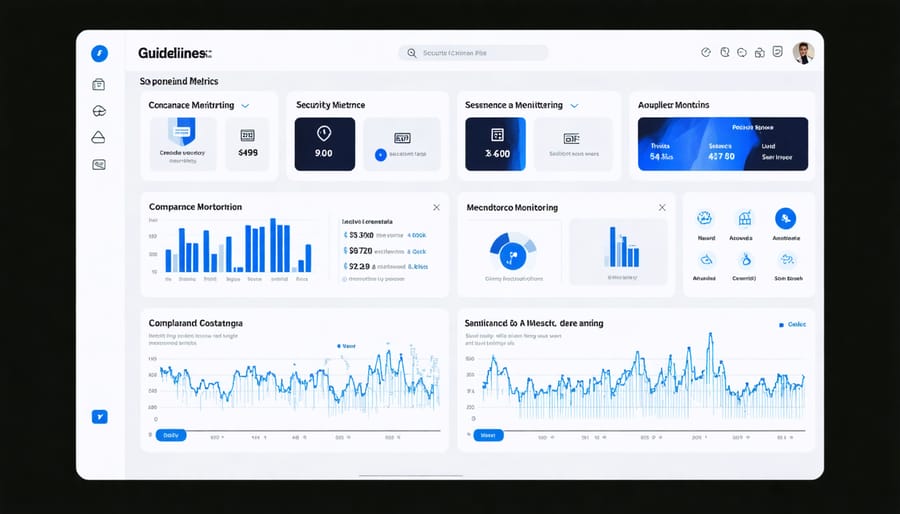
Dashboard reporting should include real-time vulnerability scanning results and security awareness training completion rates among staff, providing a comprehensive view of the organization’s security status.
Continuous Improvement Strategies
In today’s rapidly evolving threat landscape, effective CBD cybersecurity solutions require a proactive approach to continuous improvement. Organizations should implement regular security assessments, conducted at least quarterly, to identify emerging vulnerabilities and adaptation needs. This includes penetration testing, code reviews, and compliance audits specific to CBD industry requirements.
A vital component of continuous improvement is the establishment of a feedback loop system that incorporates insights from security incidents, near-misses, and user experiences. Many successful CBD companies utilize automated monitoring tools that provide real-time analytics and threat detection, enabling swift responses to potential security breaches.
Employee training programs should be updated monthly to address new threats and attack vectors. Case studies show that organizations implementing regular security awareness training experience 60% fewer security incidents compared to those with annual or sporadic training schedules.
To stay ahead of evolving threats, consider implementing AI-driven security tools that can adapt to new attack patterns and automatically adjust security protocols. Regular collaboration with industry peers through security forums and information-sharing networks can provide valuable insights into emerging threats specific to the CBD sector.
In today’s rapidly evolving digital landscape, CBD e-commerce businesses face unique cybersecurity challenges that require specialized solutions. As we’ve explored throughout this article, implementing robust cybersecurity measures is not just a technical necessity but a crucial business imperative for maintaining customer trust and regulatory compliance.
The CBD industry’s specific requirements, including strict data protection protocols, payment processing security, and compliance with varying state regulations, demand a multi-layered security approach. By implementing comprehensive cybersecurity solutions that encompass threat detection, encryption, access management, and regular security audits, businesses can significantly reduce their vulnerability to cyber attacks while ensuring operational continuity.
Remember that cybersecurity is an ongoing process rather than a one-time implementation. Regular updates, employee training, and security assessments should be integrated into your business operations. The investment in proper cybersecurity infrastructure often proves far less costly than recovering from a security breach, both in terms of financial impact and reputation damage.
As the CBD market continues to grow, cybercriminals will likely increase their focus on this sector. Staying ahead of emerging threats through proactive security measures and partnering with experienced cybersecurity providers will be essential for long-term success in the CBD e-commerce space. Make cybersecurity a priority today to ensure your business’s sustainable growth and customer trust tomorrow.
Leave a Reply