How Fire Damaged Property Leads Software Transforms Your Property Buying Business

Identify fire-damaged properties within 24-48 hours of incident reports by integrating public records APIs, emergency dispatch feeds, and municipal fire department databases into automated monitoring systems that flag opportunities before they reach the open market. Property investors using specialized software solutions like propertysaviour.co.uk gain access to distressed assets while homeowners are still navigating insurance claims, creating acquisition windows that traditional methods miss entirely.
Configure geospatial filtering parameters that match your investment criteria—property type, damage severity, location radius, and estimated repair costs—so your software delivers only pre-qualified leads rather than overwhelming your team with irrelevant data. Leading platforms cross-reference fire incident reports with property ownership records, mortgage status, and neighborhood comparable sales to generate preliminary acquisition offers within minutes of identifying a lead.
Implement skip tracing modules that compile multiple contact pathways for property owners, including phone numbers, email addresses, and relatives’ information, since fire victims often relocate temporarily and become difficult to reach through standard channels. Property owners face urgent needs to sell quickly, making timely outreach critical to conversion rates.
Establish automated workflows that trigger personalized direct mail, SMS campaigns, and email sequences immediately after lead acquisition, maintaining consistent touchpoints during the 30-90 day window when owners are most receptive to cash offers. Software that integrates CRM functionality with lead generation ensures no opportunity falls through administrative gaps while your competitors still manually search public records. The competitive advantage lies not just in finding these properties first, but in systematically converting distressed situations into profitable acquisitions through technology-driven efficiency.
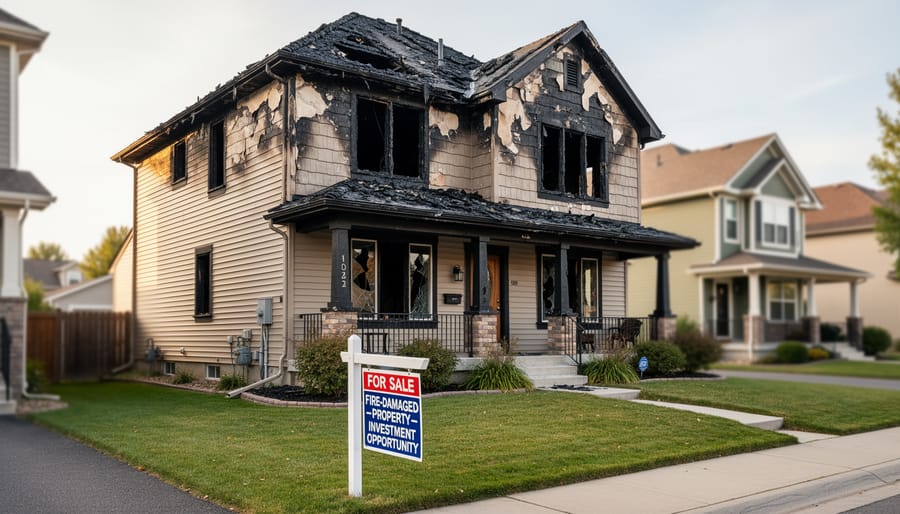
The Fire Damage Property Market: Why Specialized Lead Generation Matters
Understanding the Fire Damage Property Opportunity
Fire-damaged properties represent a unique segment within distressed real estate markets, offering compelling opportunities for investors who can navigate the complexities of acquisition and restoration. These properties typically sell at 30-50% below comparable market values, creating substantial profit margins for specialized buyers who understand the rehabilitation process.
The market dynamics favoring fire-damaged property acquisition stem from several factors. Insurance settlements often leave homeowners with insufficient funds for complete restoration, creating motivated sellers. Additionally, traditional buyers and conventional financing sources typically avoid fire-damaged homes, significantly reducing competition. Property owners facing mounting costs for security, insurance, and municipal code violations frequently prioritize quick sales over maximum pricing.
Successful acquisition scenarios vary considerably. Some properties require only cosmetic repairs following minor smoke damage, while others need comprehensive structural rehabilitation. The key differentiator for profitable investors lies in rapidly identifying opportunities that match their acquisition criteria before competitors discover them.
Specialized software solutions have emerged to address this challenge, automating the identification of fire-damaged properties through multiple data sources including fire department records, insurance claims databases, and municipal permit filings. Property investors leveraging these technologies report 40-60% faster deal identification compared to manual research methods, with one Ohio-based investment firm acquiring 23 fire-damaged properties in six months after implementing automated lead generation systems.
The Lead Generation Challenge for Property Buyers
Sourcing fire-damaged property leads presents distinct challenges that separate this niche from conventional real estate investing. The primary obstacle lies in timing sensitivity—property investors must identify opportunities within days of an incident, often before competitors even know these properties exist. Fire departments, insurance companies, and municipal records each maintain separate databases, creating significant data fragmentation that requires monitoring multiple sources simultaneously.
Traditional manual methods prove inadequate for this fast-paced market. By the time investors manually compile and verify leads from public records, competitors have already made offers. The process demands constant vigilance across various information channels, consuming valuable hours that could be spent evaluating properties and negotiating deals.
Competition intensifies the challenge further. Established wholesalers and institutional buyers often have relationships with insurance adjusters and contractors, giving them first access to opportunities. Individual investors need technological advantages to level the playing field.
Data accuracy represents another critical hurdle. Fire incident reports may contain incomplete property details, wrong owner information, or outdated contact data. Investors waste resources pursuing dead-end leads or contacting wrong parties, damaging their reputation and efficiency. Without automated verification systems, distinguishing viable opportunities from time-wasters becomes a manual, error-prone process that significantly impacts profitability and deal flow consistency.
Core Features That Define Effective Fire Damaged Property Leads Software
Real-Time Data Aggregation and Fire Incident Monitoring
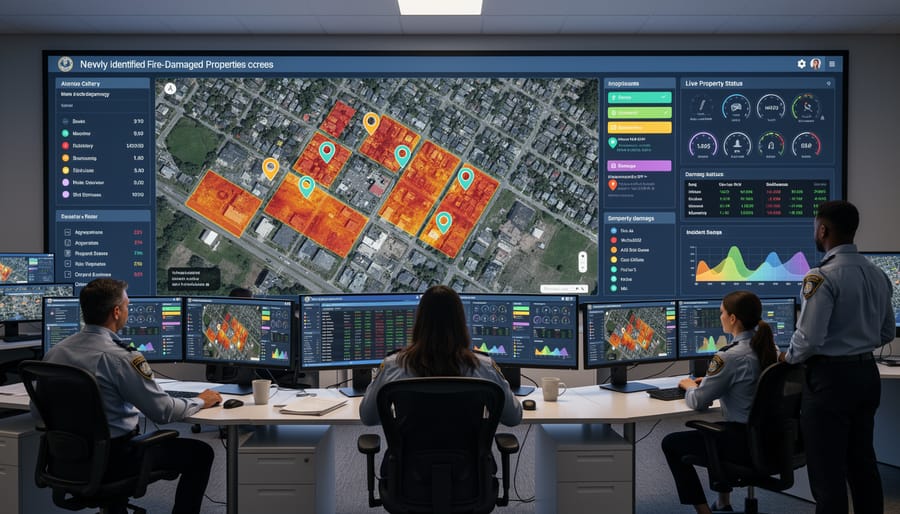
Modern fire damaged property leads software operates through sophisticated real-time data aggregation systems that continuously monitor multiple information sources. These platforms establish direct connections to municipal fire department databases, emergency response systems, and public records repositories to capture fire incident data within hours of occurrence.
The technical architecture typically employs API integrations and automated data scraping protocols that scan incident reports filed with local authorities. When a fire event is logged, the software immediately cross-references the property address against multiple databases, including county assessor records, ownership information, and property characteristics. This multi-source verification ensures accuracy and completeness before generating qualified leads.
Advanced systems incorporate machine learning algorithms that filter out false positives, such as minor incidents or properties unlikely to require acquisition services. The software evaluates damage severity indicators from incident reports, response unit deployments, and estimated loss values to prioritize genuinely distressed properties.
One property investment firm using this technology reported identifying viable opportunities 72 hours faster than competitors relying on traditional methods. By receiving notifications immediately after fire departments file incident reports, they could initiate contact with property owners during the critical decision-making window.
The aggregation process operates continuously, with some platforms processing thousands of incident reports daily across multiple jurisdictions. This automated monitoring eliminates the manual research burden while ensuring comprehensive coverage of target markets, enabling property investors to focus resources on evaluation and acquisition rather than lead discovery.
Property Assessment and Valuation Tools
Modern fire damaged property leads software incorporates sophisticated assessment tools that enable investors to evaluate opportunities without immediate site visits. These platforms integrate computer vision algorithms and machine learning models to analyze property photos, automatically categorizing damage severity across structural elements, electrical systems, and aesthetic components.
Advanced solutions pull comparable sales data and construction cost databases to generate repair estimates with 85-92% accuracy, significantly reducing manual calculation time. For example, one real estate investment firm processing 200+ monthly leads reduced their initial assessment time from 45 minutes to under 8 minutes per property using automated valuation tools.
The software calculates potential ROI by factoring in acquisition costs, estimated repairs, holding periods, and projected after-repair values based on neighborhood comps. Decision-makers can customize financial models with their specific investment criteria, including minimum profit margins and maximum renovation budgets.
Integration with county tax assessor databases and MLS systems provides comprehensive property histories, revealing previous fire incidents or structural issues that might impact renovation feasibility. Geographic information system overlays highlight zoning restrictions and permit requirements specific to fire-damaged reconstructions.
These assessment capabilities transform raw leads into actionable intelligence, allowing investors to prioritize high-potential properties and make data-driven contact decisions before competitors identify the same opportunities.

CRM Integration and Lead Management Workflows
Effective fire damaged property leads software transforms raw data into revenue by seamlessly integrating with your existing CRM infrastructure and automating the entire lead lifecycle. The most sophisticated platforms offer bi-directional API connections with major CRM systems like Salesforce, HubSpot, and Zoho, ensuring lead data flows automatically without manual data entry that consumes valuable time and introduces errors.
When fire damage records are identified through public data sources, the software should automatically enrich each lead with property valuation, ownership details, mortgage information, and historical transaction data. This enriched lead then enters your CRM with proper categorization, assignment rules, and priority scoring based on your predefined criteria. Advanced custom operations software can trigger automated workflows that send initial outreach emails, schedule follow-up tasks, and alert team members when prospects engage with communications.
One Florida-based property investor using integrated lead management workflows reported reducing their acquisition timeline from 45 days to 23 days. Their system automatically tracked every touchpoint, from initial contact through property inspection scheduling to final offer presentation, with built-in notifications preventing leads from falling through the cracks.
The tracking capabilities extend beyond simple contact management. Premium solutions provide detailed analytics showing conversion rates at each pipeline stage, team member performance metrics, and ROI calculations per lead source. This visibility enables continuous optimization of your acquisition strategy, identifying which outreach methods and follow-up sequences generate the highest conversion rates for fire damaged properties specifically.
Technical Architecture: How These Systems Work Behind the Scenes
Data Sources and API Integrations
Fire damaged property leads software relies on robust data pipeline architecture that aggregates information from multiple authoritative sources in real-time. The technical foundation typically connects to municipal and county public records databases through API integrations or automated web scraping protocols, capturing property ownership details, transaction histories, and tax assessments within hours of official filing.
Direct integration with fire department incident management systems provides the most valuable lead data. Progressive software solutions establish secure connections to Computer-Aided Dispatch (CAD) systems and National Fire Incident Reporting System (NFIRS) databases, enabling immediate notification when fire incidents are logged. These integrations often require compliance with local data privacy regulations and formal data-sharing agreements.
Insurance claim databases represent another critical data source, though access levels vary significantly. Some platforms partner with independent insurance adjusters or utilize Insurance Services Office (ISO) data feeds to identify properties with substantial fire damage claims. This correlation between incident reports and insurance activity helps qualify lead quality before investor outreach.
Multiple Listing Service (MLS) platform connections enable the software to cross-reference fire-damaged properties against active listings, identifying opportunities where owners may be motivated sellers. Advanced systems also incorporate mobile app integration capabilities, allowing field teams to access real-time data during property inspections.
A technology client in the Atlanta market demonstrated the value of comprehensive data integration by reducing lead qualification time by 67% after implementing multi-source API connections, significantly improving their acquisition pipeline efficiency.
Machine Learning for Lead Scoring and Prioritization
Modern fire damaged property leads software leverages machine learning algorithms to transform raw data into actionable intelligence, enabling investors to focus their resources on the most promising opportunities. These systems analyze dozens of variables simultaneously, creating predictive models that identify which properties are most likely to result in successful acquisitions.
The scoring process begins with property characteristics analysis. Algorithms evaluate structural damage severity, estimated repair costs, neighborhood demographics, and historical sales data to calculate potential profit margins. The system weighs factors like property age, square footage, and location-specific market trends against comparable sales to determine realistic acquisition prices and after-repair values.
Beyond property metrics, advanced platforms incorporate owner circumstance indicators into their scoring models. Machine learning examines patterns in public records, insurance claim timelines, and ownership duration to assess seller motivation levels. Properties where owners face financial strain, inherited assets, or out-of-state residence often receive higher priority scores due to increased likelihood of favorable negotiations.
The true power emerges through continuous learning. As your team records outcomes from contacted leads, the algorithm refines its predictions, identifying which combination of factors correlates with closed deals in your specific market. One Pennsylvania-based investor group reported that their machine learning-enhanced system increased conversion rates by 43% within six months by automatically deprioritizing properties with characteristics that historically resulted in stalled negotiations.
Probability scoring typically ranges from 0-100, with color-coded indicators helping teams quickly identify hot leads. The system can automatically route high-scoring opportunities to senior acquisition specialists while batching lower-priority leads for junior team members or automated follow-up sequences. This intelligent distribution ensures that human expertise focuses where it delivers maximum return, while no opportunity goes completely unexplored.
Implementation Considerations: Deploying Lead Software in Your Business
Evaluating Software Providers and Solutions
Selecting the right fire damaged property leads software requires careful evaluation across several critical dimensions. Start by assessing data quality and accuracy—the platform should aggregate information from reliable sources including municipal fire department records, insurance claim databases, and property data APIs. Request sample datasets to verify completeness, including essential details like property owner contact information, damage extent, and incident dates.
Coverage area matters significantly for your investment strategy. Some platforms focus exclusively on major metropolitan areas, while others provide nationwide data. Evaluate whether the geographic scope aligns with your target markets and expansion plans. A property investor operating in the Midwest would find limited value in software prioritizing coastal markets exclusively.
Integration capabilities determine how seamlessly the solution fits into your existing technology ecosystem. Look for platforms offering robust APIs that connect with your CRM systems, marketing automation tools, and property analysis software. This interoperability eliminates manual data entry and reduces operational friction. One commercial property acquisition firm increased their conversion rates by 34% after implementing a solution that automatically pushed verified leads into their Salesforce environment.
Scalability requirements deserve attention, particularly for growing organizations. The platform should handle increasing data volumes without performance degradation and accommodate additional users as your team expands. Consider whether the pricing model remains economically viable as usage scales. Solutions with per-lead pricing may become cost-prohibitive compared to subscription-based models for high-volume operations. Request vendor references from companies at your current size and projected growth stage to validate long-term viability.
Integration with Existing Systems and Workflows
Successfully integrating fire damaged property leads software with your existing technology ecosystem requires careful planning and execution. Most organizations already operate CRM platforms, marketing automation tools, and property management systems that contain valuable historical data and established workflows.
The first consideration is API compatibility. Modern lead generation software should offer RESTful APIs or pre-built connectors for popular CRM systems like Salesforce, HubSpot, or Zoho. This enables real-time data synchronization, ensuring that fire damage leads flow directly into your sales pipeline without manual data entry. One property investment firm reduced lead processing time by 73% after implementing automated API connections between their lead software and existing CRM.
Data migration presents unique challenges, particularly when consolidating historical property records, lead sources, and performance metrics. Best practices include conducting a comprehensive data audit before migration, mapping fields between systems to prevent information loss, and implementing a phased rollout approach. Starting with a pilot team allows you to identify integration issues before company-wide deployment.
For organizations lacking internal technical resources, partnering with providers offering IT infrastructure support can streamline the integration process. These specialists handle system compatibility assessments, custom connector development, and ongoing maintenance.
User adoption is equally critical. Successful implementations include comprehensive training programs, clear documentation, and designated internal champions who can troubleshoot issues. One wholesaler achieved 94% user adoption within 30 days by creating role-specific training modules and establishing weekly feedback sessions during the transition period.
Real-World Impact: Success Metrics and Performance Indicators
Key Performance Metrics to Track
Measuring the effectiveness of fire damaged property leads software requires tracking specific performance indicators that directly impact your acquisition strategy and bottom line. Lead-to-acquisition conversion rates stand as the primary metric, measuring how many identified fire-damaged properties progress to successful purchases. Industry leaders typically achieve conversion rates between 8-15%, significantly higher than traditional property sourcing methods averaging 3-5%.
Time-to-contact represents another critical KPI, measuring the interval between fire incident reporting and initial property owner outreach. Software automation reduces this timeframe from days to hours, providing competitive advantage in securing opportunities before competitors. Top-performing systems enable contact within 24-48 hours of incident documentation.
Cost-per-acquisition improvements demonstrate software ROI by comparing investment costs against traditional lead generation expenses. Companies implementing specialized software report 40-60% reductions in acquisition costs when integrated with broader digital marketing strategies.
Additional metrics include lead quality scoring accuracy, data source coverage comprehensiveness, and system response time. One midwest property investment firm documented their success by tracking these KPIs, reducing their average acquisition cost from $8,500 to $3,200 per property within six months of implementation while simultaneously increasing deal flow by 180%. These quantifiable improvements showcase how systematic metric tracking drives measurable business outcomes.
Case Study: Regional Property Buyer Transformation
Mountain State Property Solutions, a regional property buyer operating across three states, faced declining response rates from traditional distressed property marketing channels. After implementing a specialized fire damaged property leads platform in Q2 2023, they transformed their acquisition pipeline within six months.
The company integrated automated fire incident monitoring that pulled data from municipal fire department reports, insurance claim databases, and public records across 47 counties. Their custom dashboard prioritized leads based on property values, damage severity, and owner contact information accuracy.
The results demonstrated measurable impact on their operations. Lead acquisition costs dropped from $147 per qualified lead to $52, representing a 65% reduction. Deal flow increased by 180%, moving from an average of 11 fire damaged property acquisitions quarterly to 31. Most significantly, their average time from lead identification to initial owner contact decreased from 18 days to 3 days, giving them substantial competitive advantage.
The platform’s automated workflow engine eliminated manual data entry, freeing their acquisition team to focus on relationship building and negotiation. Integration with their existing CRM system ensured seamless handoff between marketing automation and deal management, while detailed analytics allowed continuous optimization of their outreach strategies based on conversion patterns across different property types and damage levels.

For serious property investors navigating today’s competitive distressed property market, specialized fire damaged property leads software represents more than a technological upgrade—it’s a fundamental strategic advantage. The convergence of predictive analytics, automated data aggregation, and real-time alert systems has transformed how sophisticated buyers identify and acquire high-potential properties before competitors even know they exist.
The evidence from implementation case studies demonstrates measurable impact. Investment firms leveraging these platforms report 40-60% reductions in lead acquisition costs while simultaneously improving deal quality through better targeting parameters. One Midwest-based wholesaler documented closing 23 fire-damaged properties in their first year after implementation, compared to just 7 the previous year using traditional methods. These results underscore how the right technology stack directly translates to bottom-line performance.
Technology decision-makers evaluating these solutions should prioritize platforms offering comprehensive API integration capabilities, customizable filtering algorithms, and scalable cloud infrastructure. The most effective systems seamlessly incorporate multiple data sources—insurance claims, fire department records, municipal permits, and property assessment databases—into unified, actionable intelligence.
As real estate investing continues its digital transformation, early adopters of sophisticated lead generation platforms establish compounding advantages. The gap between technologically equipped investors and those relying on conventional prospecting methods widens with each market cycle.
For organizations ready to advance their acquisition capabilities, the path forward involves three critical steps: conducting a thorough needs assessment aligned with investment volume and geographic focus, evaluating vendor solutions against specific technical requirements, and implementing pilot programs with clear success metrics. The competitive landscape rewards those who act decisively while maintaining strategic clarity about their technology investments.
Leave a Reply