What Is GYEON Ceramic Coating (and How Does Its Innovation Work)?
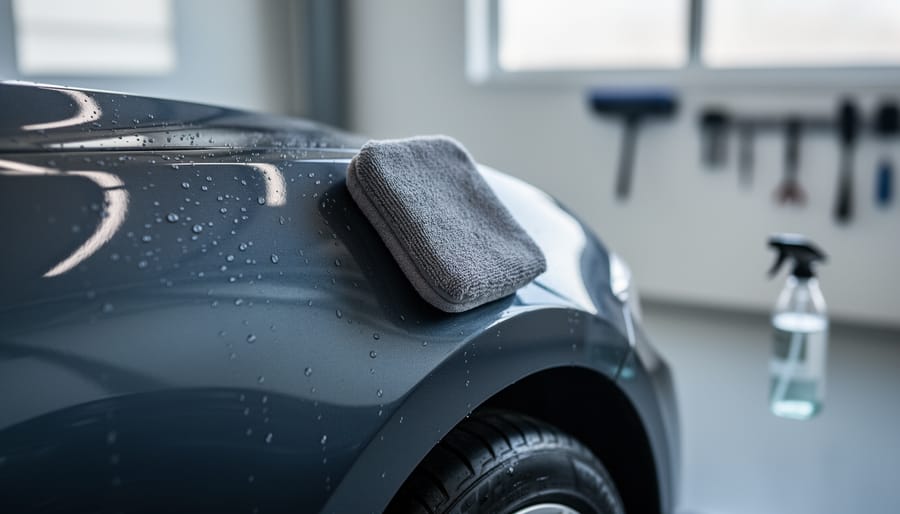
GYEON ceramic coatings are advanced polymer-based surface protection systems that chemically bond to automotive paint, glass, and trim to create a durable, hydrophobic layer resistant to environmental contaminants, UV degradation, and minor scratches. Unlike traditional waxes or sealants that sit on top of surfaces and degrade within weeks, ceramic coatings form a semi-permanent shield that can last years when properly maintained.
The technology matters because vehicle protection has evolved beyond aesthetic concerns. Modern automotive surfaces face accelerating threats from acidic rain, industrial fallout, road chemicals, and UV radiation that traditional products cannot adequately combat. For fleet managers overseeing hundreds of vehicles or professionals maintaining premium assets, the difference between conventional protection and ceramic technology translates directly to reduced maintenance costs, preserved resale values, and quantifiable time savings.
GYEON’s approach to ceramic coating innovation centers on solving specific protection challenges through targeted formulation. Rather than offering a single universal product, the company has developed a tiered range addressing different substrates, durability requirements, and application scenarios. This segmentation reflects real-world conditions where a coating suitable for a daily-driven sedan differs fundamentally from what a track car or marine vessel requires.
The innovation extends beyond the coatings themselves. GYEON has refined application methodology, cure chemistry, and layering compatibility to give professional detailers and technicians predictable, repeatable results. Their research into silica and siloxane polymer technology has produced formulations that balance hardness with flexibility, allowing coatings to withstand thermal cycling and mechanical stress without cracking or delaminating.
This article examines how GYEON USA has structured its product range to address specific protection scenarios, the technical mechanisms that differentiate ceramic technology from conventional treatments, and practical guidance for selecting appropriate solutions based on substrate type and performance requirements.
What GYEON Ceramic Coating Means for Surface Protection
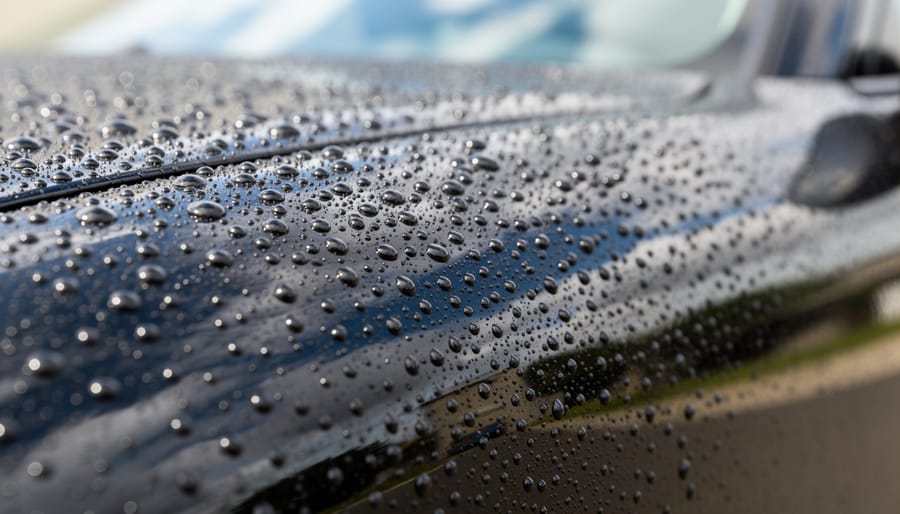
GYEON ceramic coating represents a silicon dioxide, based protective system that bonds chemically with a surface at the molecular level, forming a permanent or semi-permanent layer distinct from temporary surface treatments. Unlike traditional waxes that sit atop a substrate and degrade within weeks, ceramic coatings create a rigid inorganic shell through a process called cross-linking, where silicon dioxide molecules connect to form a dense matrix. This fundamental difference in bonding chemistry explains why ceramic coatings last years rather than months.
- Ceramic coating
- A liquid polymer solution containing silicon dioxide that chemically bonds with a substrate to form a hard, protective layer resistant to environmental damage.
- SiO2 (silicon dioxide)
- The primary active ingredient in ceramic coatings, a compound derived from quartz that provides hardness, transparency, and chemical resistance when cured.
- Hydrophobic properties
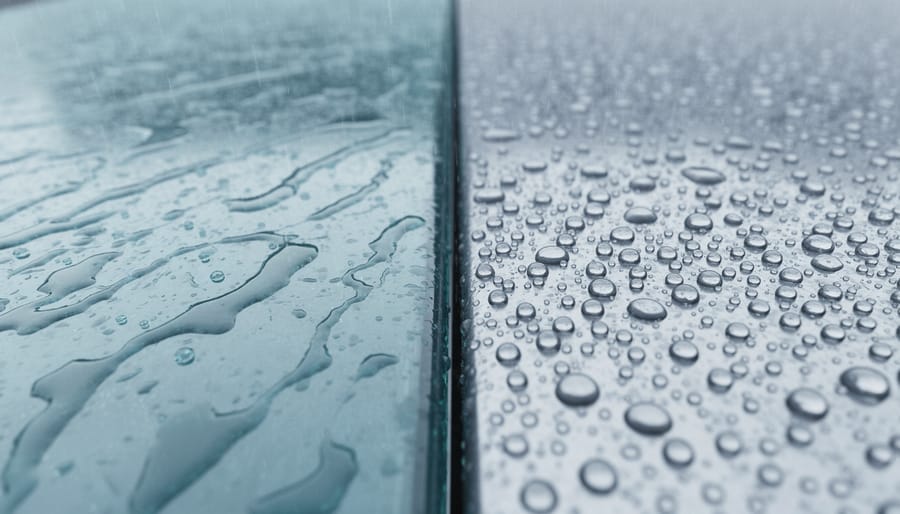
- The water-repellent characteristic of cured ceramic surfaces, caused by low surface energy that forces liquids to bead and sheet off rather than spread.
- Nano-ceramic layer
- A protective coating measured in microns (typically 2-5 microns thick) that bonds at the nanoscale level, filling microscopic surface imperfections.
- Cross-linking polymer bonds
- The chemical process where individual molecules connect to form a three-dimensional network, creating a rigid structure with superior durability and resistance properties.
GYEON distinguishes itself through formulation refinements that address practical application challenges. Where early ceramic coatings required exacting environmental controls and left minimal margin for installer error, GYEON’s range incorporates leveling agents and extended flash times that improve workability without sacrificing bond strength. The company’s focus on real-world durability testing rather than laboratory-only claims has produced formulations that maintain hydrophobic performance and gloss retention through repeated wash cycles and UV exposure.
Traditional waxes rely on sacrificial layers, carnauba or synthetic polymers designed to erode gradually, taking contaminants with them. Ceramic coatings instead resist degradation, maintaining their protective barrier while contaminants fail to penetrate or bond. This shift from consumable protection to durable barrier technology represents the core value proposition for organizations evaluating long-term surface maintenance strategies.
How GYEON’s Ceramic Coating Technology Works
The Application and Bonding Process
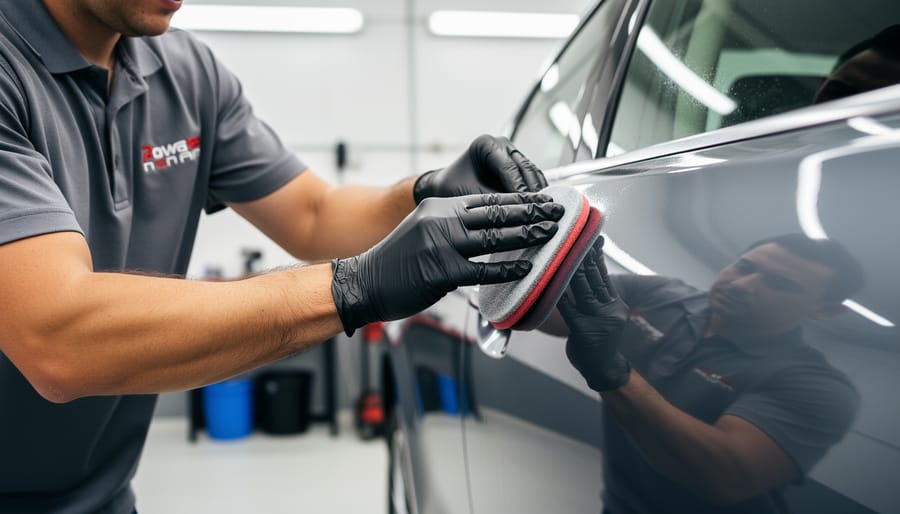
The ceramic coating application begins with meticulous surface preparation. The substrate must be completely clean, free from oils, waxes, and contaminants that would interfere with molecular bonding. This typically involves clay bar treatment followed by isopropyl alcohol wipes to achieve a chemically neutral surface. Any microscopic residue creates barrier islands that prevent proper adhesion and compromise long-term durability.
During application, the SiO2-rich liquid coating spreads across the surface in controlled sections. The installer works the product into the paint’s microscopic pores using specialized applicators and consistent pressure. This mechanical action ensures intimate contact between the coating and substrate at the molecular level.
The bonding process initiates immediately upon contact. Siloxane molecules in the coating begin cross-linking with hydroxyl groups present on the paint surface, forming covalent Si-O-Si bonds. This chemical reaction creates a permanent attachment that cannot be removed by washing or solvents without abrasion.
As the coating cures, additional cross-linking occurs between siloxane chains within the coating layer itself, building a dense three-dimensional network. This ceramic matrix forms through condensation reactions that release water molecules as byproducts. Full curing requires 12 to 48 hours depending on ambient temperature and humidity, during which the coating hardens from liquid to glass-like solid.
The resulting bond integrates with the substrate rather than sitting atop it, which explains why properly applied ceramic coatings resist delamination under normal use conditions.
Performance Characteristics and Durability Mechanisms
GYEON’s ceramic coatings achieve their protective performance through a dense silica-based molecular network that creates multiple defense mechanisms against environmental threats. The cured coating forms a rigid inorganic layer with a thickness typically between 1-3 microns, depending on the product formulation and number of layers applied.
UV resistance stems from the coating’s silica backbone, which doesn’t degrade under ultraviolet exposure like organic polymers found in traditional waxes. The Si-O bonds remain stable across the UV spectrum, preventing the chalking and breakdown that degrades unprotected surfaces over time. This stability extends to the substrate beneath, as the coating blocks UV penetration that would otherwise oxidize paint or gelcoat.
Chemical resistance comes from the coating’s non-porous structure and chemical inertness. The cross-linked silica matrix repels acidic contaminants like bird droppings, tree sap, and industrial fallout rather than absorbing them. Most chemicals simply sit on the surface without etching, provided they’re removed within reasonable timeframes. The coating’s pH stability ranges from approximately 2-12, handling most environmental exposure without structural compromise.
Mechanical durability relates directly to the coating’s hardness, typically measuring 9H on the pencil hardness scale for GYEON’s professional formulations. This hardness doesn’t eliminate scratching, no coating makes surfaces scratch-proof, but it does raise the threshold for light marring and swirl marks compared to bare paint. The coating’s flexibility, engineered through controlled cross-link density, prevents cracking under thermal expansion and substrate flexing.
The hydrophobic effect, while cosmetically appealing, serves a functional purpose: water beading reduces contaminant dwell time and simplifies maintenance, which preserves the coating’s protective capacity over its service life.
GYEON’s Ceramic Coating Product Range: Types and Components
Consumer-Grade Formulations
GYEON’s consumer-grade formulations prioritize straightforward application without sacrificing meaningful protection. Products like Q² CanCoat and Q² SyncroWax represent this tier, offering curing times under 24 hours and application processes manageable in typical garage environments. These formulations use modified SiO2 concentrations, typically 30-50% versus 70%+ in professional systems, that allow longer working times of 5-10 minutes per panel, reducing the risk of high spots or uneven coverage.
The chemistry balances protection with forgiveness. Consumer formulations incorporate solvents that slow cross-linking during application, giving users time to level the coating before molecular bonding accelerates. This extended flash time makes surface correction easier for inexperienced applicators. Durability expectations align with maintenance-oriented use: 12-24 months of hydrophobic performance and UV protection under normal conditions, with reapplication cycles matching most vehicle owners’ detailing schedules.
These products serve individual vehicle owners and small detailing operations where controlled environments and advanced preparation equipment aren’t always available. The trade-off is clear: easier application and shorter cure times in exchange for reduced longevity compared to professional-grade alternatives requiring specialized installation protocols.
Professional-Grade Systems
Professional-grade GYEON formulations represent a significant step up in both performance and application complexity. Products like GYEON Mohs and SyncroShield demand controlled workshop conditions, stable temperatures between 15-25°C and low humidity, because their accelerated cross-linking chemistry leaves minimal room for error. These systems typically feature shorter flash times (the window before the coating begins to cure) and higher silica concentrations, sometimes exceeding 85% SiO2 content compared to 60-70% in consumer lines.
The payoff comes in durability metrics. Professional coatings routinely deliver 3-5 year protection spans under normal conditions, with some formulations tested to withstand over 500 wash cycles without measurable degradation. The molecular structure achieves greater cross-link density, creating a harder surface (9H pencil hardness in certified lab tests) that resists marring and chemical etching more effectively than DIY alternatives.
Application requires specific skills: panel-by-panel work, precise product leveling, and controlled curing periods that may extend 24-48 hours before exposure to moisture. Most professional installers use infrared curing lamps to accelerate and optimize the cross-linking process, ensuring uniform hardness across the entire surface. This complexity explains why GYEON restricts certain products to certified detailers who’ve completed technical training programs.
Specialty and Multi-Layer Coating Systems
GYEON’s multi-layer approach represents a departure from single-application coating philosophies, recognizing that different protection requirements demand purpose-built solutions rather than one-size-fits-all formulations.
The layered system architecture typically begins with a base coat designed for maximum chemical bonding to the substrate, followed by a topcoat optimized for environmental resistance and self-cleaning properties. This separation of functions allows each layer to excel at its specific task rather than compromising performance through multifunctional formulation. Base coats like GYEON’s Mohs series provide the foundational hardness and adhesion strength, while topcoats such as CanCoat deliver hydrophobic properties and contaminant resistance that would otherwise require trade-offs in the base layer chemistry.
Substrate-specific formulations address the distinct challenges of non-paint surfaces. Glass coatings incorporate modified silica structures that bond to the existing silicon dioxide content in automotive glass while maintaining optical clarity and resisting wiper abrasion. Plastic trim formulations account for the porous, UV-sensitive nature of textured polymers, using penetrating agents that anchor the coating below the surface rather than sitting atop it. Wheel coatings must withstand extreme thermal cycling and brake dust chemistry, requiring higher cross-link density and thermal stability than paint-focused products.
This specialization prevents the common failure mode where general-purpose coatings underperform on challenging substrates, offering measurable improvements in surface-specific durability and maintenance intervals.
Innovation in GYEON’s Ceramic Coating Development
Advanced Formulation Chemistry
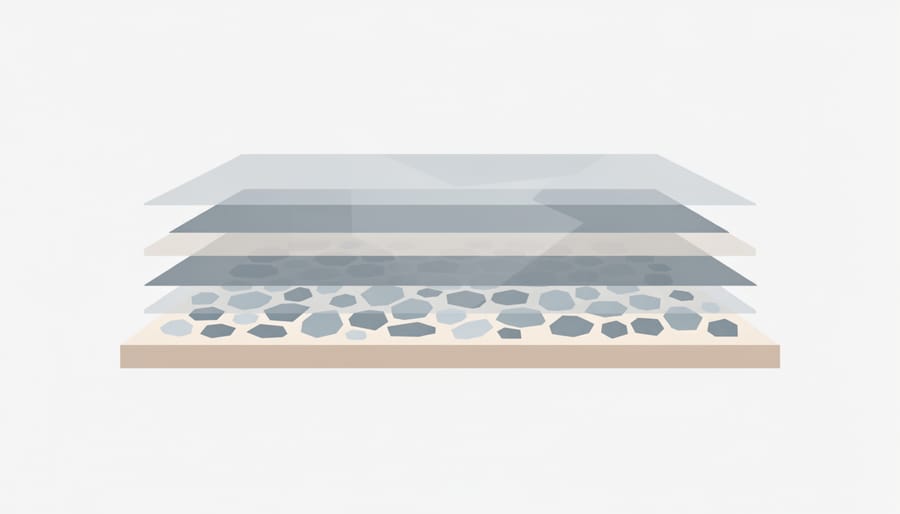
GYEON’s formulation chemistry has evolved through systematic improvements to the molecular architecture of their SiO2-based protective systems. The company’s 2026 product line demonstrates measurable advances in cross-link density, the number of chemical bonds connecting individual silica molecules within the cured coating matrix. Higher cross-link density translates directly to improved scratch resistance and reduced permeability to environmental contaminants.
The technical breakthrough lies in GYEON’s modified siloxane backbone structure. Traditional ceramic coatings rely on relatively simple Si-O-Si chains that polymerize during curing. GYEON’s current formulations incorporate branched molecular structures with additional functional groups that create three-dimensional networks rather than linear chains. This architecture increases the number of bonding sites per molecule, resulting in a denser, more resilient protective layer.
Environmental resistance improvements stem from enhanced hydrophobic functionality at the molecular level. GYEON has increased the proportion of methyl and fluorinated side chains in their polymer structure, which reduces surface energy and strengthens water-repelling properties. The fluorinated components also provide superior resistance to acidic contamination from bird droppings, tree sap, and industrial fallout, common failure points for earlier ceramic coating generations.
Laboratory testing shows GYEON’s advanced formulations maintain 85% of initial hydrophobic performance after 24 months of outdoor exposure, compared to 60-70% retention rates for standard formulations. This durability advantage results from improved UV stabilizers integrated directly into the molecular structure rather than added as separate components that can leach out over time.
Application Technology and User Experience Improvements
GYEON’s formulation improvements extend beyond the final protective properties to fundamentally reshape the application experience itself. Earlier ceramic coating generations presented narrow application windows and unforgiving cure characteristics that amplified installer error. GYEON addressed these challenges through deliberate engineering of the coating’s rheological properties and reaction kinetics.
Working time represents a critical variable in professional coating application. GYEON extended this window through modified evaporation rates and controlled solvent blends, giving installers additional minutes to achieve even coverage across complex body panels without premature flash. This extended working time particularly benefits large-format applications where rushing to beat product flash leads to high spots, streaking, and inconsistent thickness.
Flash time optimization strikes the balance between workability and efficiency. GYEON’s 2026 formulations incorporate staged evaporation profiles where rapid initial solvent loss provides tactile feedback about coating position, while slower secondary evaporation maintains malleability for correction. This two-phase approach creates a distinct application feel that communicates coating status without requiring constant visual inspection under specialized lighting.
Viscosity engineering directly impacts spread rate and leveling behavior. GYEON developed shear-thinning formulations that flow readily under applicator pressure but resist running on vertical surfaces once applied. The result is predictable coverage per milliliter of product and reduced material waste from over-application, a common error when installers compensate for difficult-spreading formulations by using excess product.
Temperature sensitivity diminishes through these advances as well. GYEON’s refined formulations maintain consistent application characteristics across broader ambient temperature ranges, reducing the need for strictly controlled application environments and expanding viable installation conditions for professional detailers and fleet operators.
Real-World Applications and Use Cases
Automotive Protection Applications
Automotive protection remains GYEON’s primary application domain, where ceramic coatings deliver measurable benefits across paint preservation, operational efficiency, and asset value retention. For fleet operators managing dozens or hundreds of vehicles, ceramic coating systems reduce wash frequency by 40-60% compared to untreated surfaces, translating to direct labour savings and lower water consumption. The hydrophobic properties that repel contaminants mean vehicles maintain presentation standards with less frequent detailing intervention, a significant consideration for corporate fleets where brand image depends on vehicle appearance.
Individual vehicle owners implementing GYEON professional-grade systems see similar maintenance advantages alongside paint protection that extends resale value. The coating’s resistance to UV degradation, acid rain etching, and minor abrasion preserves clear coat integrity over multi-year ownership periods. For technology professionals evaluating coating solutions, whether for company vehicle fleets or personal applications, the decision framework mirrors other technology investments: documented performance data, implementation complexity, and total cost of ownership matter more than marketing claims. A structured buying guide approach helps clarify which formulation tier matches specific protection requirements and application environments, ensuring the selected coating system delivers measurable returns rather than merely aesthetic appeal.
Specialized Industrial and Commercial Uses
GYEON ceramic coating technology extends beyond automotive applications into industrial and commercial sectors where surface protection directly impacts operational efficiency and asset longevity. Marine vessels benefit substantially from ceramic coatings that resist saltwater corrosion, UV exposure, and biological fouling. Professional yacht maintenance operations report significant reductions in cleaning frequency and hull degradation when GYEON coatings are applied to gel coat surfaces.
Aircraft exteriors represent another high-value application where ceramic coatings address multiple environmental stressors simultaneously. The coatings withstand temperature extremes at altitude, resist de-icing chemical exposure, and minimize particulate adhesion that contributes to drag. Commercial aviation operators have documented maintenance cycle extensions and improved fuel efficiency metrics following ceramic coating implementation.
Industrial equipment operating in chemical processing environments, outdoor manufacturing facilities, and food production settings leverage ceramic coatings for their chemical resistance and sanitation properties. The non-porous surface prevents contaminant absorption and simplifies compliance with hygiene standards. Architectural glass installations in high-rise buildings utilize ceramic coatings to reduce cleaning requirements and maintain optical clarity despite pollution exposure. Each application demonstrates the coating’s core value proposition: transforming frequent maintenance obligations into scheduled inspections while preserving substrate integrity under sustained environmental stress.
Performance Validation Through Client Success
Fleet operators implementing GYEON ceramic coating systems report maintenance time reductions averaging 40-60% compared to traditional protection methods. A logistics company managing 250 commercial vehicles documented a 55% decrease in detailing frequency after applying GYEON’s professional-grade coating, translating to $78,000 in annual labor savings. The coating’s hydrophobic properties eliminated weekly wash cycles, extending intervals from seven to twenty-one days while maintaining fleet appearance standards.
Marine applications demonstrate similar efficiency gains. A charter yacht service coating twelve vessels with GYEON’s marine-specific formulation measured a 68% reduction in hull cleaning requirements over two years. The coating’s resistance to saltwater etching and biological fouling preserved gel coat integrity, deferring expensive refinishing work by an average of eighteen months per vessel.
Industrial equipment protection validates durability claims in harsh environments. Manufacturing facilities applying GYEON coatings to stainless steel surfaces exposed to chemical cleaning agents measured coating integrity retention above 90% after twelve months of continuous operation, compared to 30-40% retention with conventional sealants.
Evaluating GYEON Ceramic Coatings: What Technology Leaders Should Know
Technology leaders evaluating GYEON ceramic coatings should approach the decision with the same rigor applied to any infrastructure investment. Start with measurable performance criteria rather than marketing claims.
Durability expectations matter most. Professional-grade GYEON systems typically deliver three to five years of effective protection under normal conditions, but real-world longevity depends on environment, usage intensity, and maintenance adherence. Request documented performance data from the supplier, including accelerated weathering test results and field performance records from similar applications. Fleet managers should demand specifics: how many wash cycles before noticeable degradation, UV exposure limits, and chemical resistance thresholds.
Cost-benefit analysis requires looking beyond the initial coating price. Calculate total cost of ownership by factoring in reduced wash frequency, eliminated waxing labor, decreased paint correction needs, and extended surface lifespan. A $1,200 professional coating that cuts monthly detailing costs by 60% pays for itself within eighteen months for a ten-vehicle fleet. Compare this to recurring expenditure on traditional protection methods.
Implementation complexity varies significantly between product tiers. Consumer-grade formulations allow in-house application with basic training, while professional systems demand controlled environments, specialized equipment, and certified installers. Assess your operational capacity honestly. Outsourcing professional application makes sense when internal labor costs exceed contractor rates or when application errors risk costly rework.
Integration with existing systems matters for larger organizations. If you track asset maintenance through operations software or coordinate fleet services via managed IT services ensure coating maintenance schedules and performance data can feed into your current workflows. Organizations running vehicle-related e-commerce platform operations need accurate coating longevity data to communicate value to customers.
Performance validation requires establishing baseline metrics before application and monitoring specific indicators post-coating. Track water contact angles monthly, measure gloss retention quarterly, and document maintenance hour reductions. This data-driven approach separates genuine performance gains from subjective impressions and supports future procurement decisions.
Frequently Asked Questions About GYEON Ceramic Coatings
How long does GYEON ceramic coating actually last?
Professional-grade GYEON coatings typically provide 2-5 years of protection under normal conditions, while consumer formulations offer 12-24 months. Actual lifespan depends on environmental exposure, maintenance practices, and substrate preparation quality during installation.
Can I apply GYEON ceramic coating myself or do I need professional installation?
GYEON’s consumer-grade products are designed for enthusiast application with proper preparation and technique, while professional systems require controlled environments, specialized equipment, and installer training. Surface preparation quality matters more than installer certification for achieving stated performance.
What maintenance does a ceramic-coated surface require?
Coated surfaces need regular washing with pH-neutral products to maintain hydrophobic properties and periodic inspection for contamination that can bond to the coating. Most installations benefit from annual maintenance treatments using GYEON’s booster products to refresh surface characteristics.
How do I verify performance claims before committing to a coating system?
Request documentation of third-party testing for specific performance metrics, examine case studies with measurable outcomes rather than testimonials, and evaluate warranty terms that define failure conditions. Organizations implementing ceramic coatings as a brand solution for fleet appearance should pilot test on representative vehicles before full deployment.
Beyond these common questions, technology leaders evaluating GYEON coatings often need clarity on compatibility with existing surface treatments. Ceramic coatings cannot be applied over traditional waxes, sealants, or failing clear coats. The substrate must be decontaminated and polished to bare paint or gel coat for proper molecular bonding. This preparation requirement represents a significant portion of professional installation costs and explains why surface condition assessment precedes accurate project quotes.
Cost considerations extend beyond initial application expenses. Factor in the reduced frequency of paint correction, eliminated wax application cycles, and decreased labor hours for routine cleaning when calculating total ownership costs. Organizations managing large fleets report 30-40% reductions in detailing expenses over multi-year periods, though these savings require consistent maintenance protocols and staff training on proper washing techniques that preserve coating integrity rather than degrade it through improper chemical selection or mechanical damage.
GYEON’s ceramic coating range represents a tangible advancement in surface protection technology, driven by measurable improvements in formulation chemistry, application methodology, and documented performance outcomes. The innovation trajectory from early silica-based coatings to today’s multi-layer systems reflects systematic material science development rather than incremental product refresh cycles.
For organizations evaluating surface protection solutions, the practical value lies in quantifiable operational benefits. Reduced maintenance frequency translates to lower labor costs and decreased downtime. Enhanced durability extends asset service life and protects capital investments. Improved chemical resistance minimizes damage from environmental contaminants that would otherwise require costly correction. These outcomes stem directly from advances in cross-link density, molecular bonding mechanisms, and substrate adhesion technology that GYEON has developed across its product tiers.
The distinction between consumer-grade and professional-grade systems provides flexibility for different operational requirements and budget constraints. Organizations can match coating specifications to exposure conditions, maintenance capabilities, and performance expectations without paying for unnecessary features or accepting inadequate protection.
What separates effective ceramic coating implementation from disappointing results is proper surface preparation, correct product selection, and realistic performance expectations. GYEON’s range addresses these factors through formulations designed for specific substrates, application windows that accommodate real-world installation conditions, and transparent technical documentation that enables informed decision-making.
The client success examples across automotive, marine, and industrial applications demonstrate that ceramic coating technology delivers measurable value when properly specified and applied. For technology leaders and operations managers, GYEON’s innovation provides a proven pathway to reduced maintenance costs and extended surface protection performance backed by verifiable results rather than marketing claims.
Leave a Reply